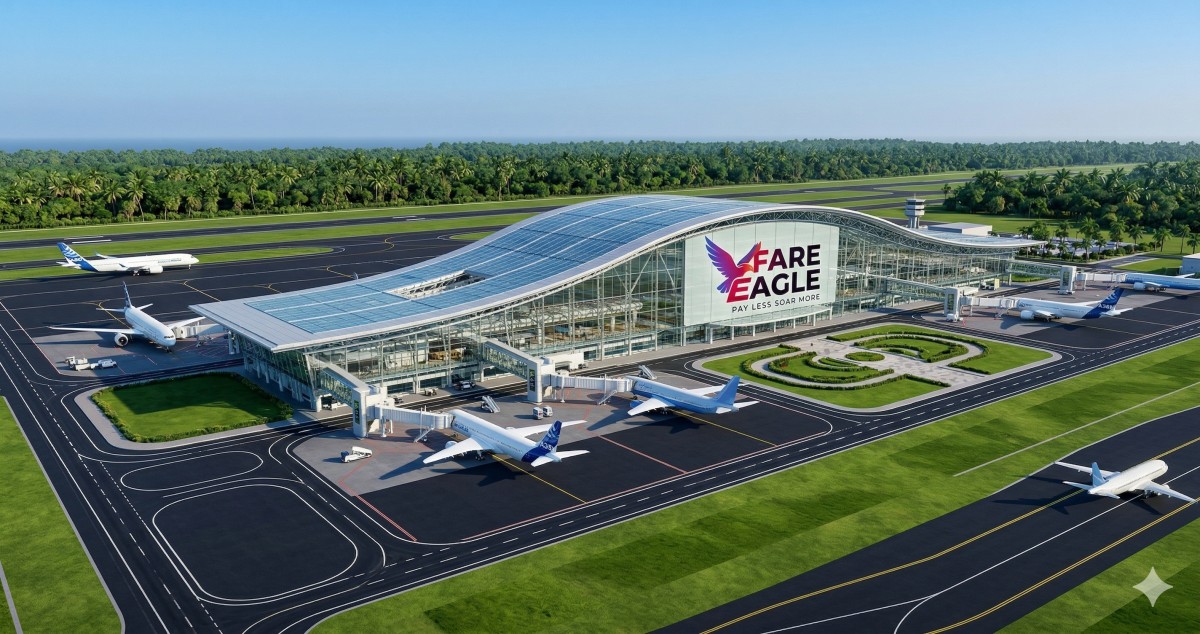
Navi Mumbai International Airport opened in December 2025 with 22 daily departures and 16 destinations. Respectable for a new airport, but not exactly a game-changer for the 25+ million people living in the Mumbai Metropolitan Region.
That's changed fast. NMIA just unveiled its first summer schedule running from March 29 to October 24, 2026, and the numbers tell a different story: 46 destinations, 78 daily departures, 1,092 weekly flight movements, and 30 brand new routes. In less than four months, the airport has tripled its capacity and built a route network that covers practically every major city in India.
If you live anywhere in the MMR, or in Pune, this is worth paying attention to.
The Route Network
NMIA's summer schedule connects to 46 domestic destinations. That's not just metros. It's a mix of business cities, tourist destinations, pilgrimage centres, and tier-2 connectors that cover the full spectrum of why Indians fly.
Here's how the departures break down by destination (top cities by daily frequency):
| Destination | Daily Departures | Category |
|---|---|---|
| Delhi | 9 | Metro / Business |
| Goa | 7 | Tourism / Leisure |
| Bengaluru | 6 | Metro / Business / Tech |
| Cochin (Kochi) | 5 | Tourism / Business |
| Hyderabad | 4-5 | Metro / Business / Tech |
| Kolkata | 3-4 | Metro / Business |
| Lucknow | 3-4 | Tier-1 / Govt |
| Varanasi | 3-4 | Pilgrimage / Tourism |
| Indore | 3 | Tier-2 Business |
Beyond these high-frequency routes, the 30 new additions include: Agra, Aurangabad, Ayodhya, Bagdogra, Bareilly, Belgaum, Bhavnagar, Bhopal, Chandigarh, Dehradun, Diu, Durgapur, Goa (Dabolim), Gorakhpur, Hindon, Hirasar (Rajkot), Hubli, Jabalpur, Jammu, Jharsuguda, Kannur, Kolhapur, Madurai, Patna, Raipur, Srinagar, Tirupati, Trivandrum, and Vizag.
That's a serious network. Pilgrimage traffic gets Ayodhya, Varanasi, and Tirupati. Tourism gets Goa, Srinagar, Bagdogra (gateway to Darjeeling/Sikkim), and Dehradun (gateway to Mussoorie/Rishikesh). Business gets every major metro plus tier-2 industrial cities like Indore, Raipur, and Hubli. Even smaller cities like Jharsuguda, Durgapur, and Kolhapur are connected, filling gaps that the old Mumbai airport never addressed.
The Growth Numbers
| Metric | At Launch (Dec 2025) | By End April 2026 | Change |
|---|---|---|---|
| Daily departures | 22 | 78 | 3.5x increase |
| Destinations | 16 | 46 | 30 added |
| Weekly flight movements | ~310 | 1,092 | 3.5x increase |
| Airlines operating | 4-5 | 5+ (IndiGo, Akasa, AI Express, Star Air, SpiceJet) | Growing |
Tripling capacity in four months is unusual for any airport in the world, let alone one that's brand new. It shows two things: the airlines see real demand in the MMR that wasn't being served by CSMIA, and the airport infrastructure is ready to handle the growth without the teething problems that plagued other new Indian airports.
The Airlines
Three carriers are driving most of the expansion:
IndiGo is the dominant player, as expected. They're adding 30 new routes from NMIA, making it one of their key western India bases. IndiGo's massive domestic network means you can connect from Navi Mumbai to practically anywhere in India with at most one stop.
Akasa Air is ramping up aggressively. As a newer airline still building its network, NMIA gives Akasa access to the Mumbai market without fighting for scarce slots at the congested old airport. Expect competitive fares as Akasa tries to build market share.
Air India Express is the third major operator, adding routes to both metros and leisure destinations. Their focus on price-sensitive routes to Goa, Kerala, and religious destinations aligns well with the passenger profile in Navi Mumbai and the wider MMR.
Star Air and SpiceJet also operate from NMIA, covering regional routes and additional metro connections.
Who Actually Benefits
Let's be specific about who this airport helps and how much time it saves, because "convenient for MMR residents" is vague. Here's the real-world difference:
Navi Mumbai residents (Vashi, CBD Belapur, Kharghar, Panvel): NMIA is 20-40 minutes away by car. CSMIA used to be 60-120 minutes depending on traffic and which part of Navi Mumbai you're coming from. That's 1-2 hours saved each way. On a round trip with check-in time factored in, you're recovering 3-4 hours of your day. For business travellers making weekly or biweekly trips, that adds up to days per month.
Thane residents: Similar story. The drive to CSMIA from most parts of Thane involved crossing through some of Mumbai's worst traffic corridors. NMIA is accessible via the eastern freeway and MTHL bridge, cutting travel time significantly.
Pune travellers: This is the interesting one. The drive from Pune to NMIA via the Mumbai-Pune Expressway is shorter and less congested than the drive to CSMIA, which requires navigating through Mumbai city traffic after the expressway ends. For many Pune residents, NMIA is now the closer airport for domestic flights. Think about that: a major city with its own airport is better served by a neighboring city's new airport for certain routes. That's how bad the CSMIA situation had gotten.
The Airoli-Belapur-Panvel corporate corridor: This stretch of Navi Mumbai has one of the highest concentrations of IT parks, BPO centres, and corporate offices in the MMR. Thousands of employees travel for work from this belt. Having an airport 20 minutes away instead of 90 minutes away fundamentally changes the calculus on same-day business trips. A Delhi meeting that used to require an overnight stay might now be doable as a day trip.
NMIA vs CSMIA: Which Airport Should You Use?
For now, the split is straightforward:
Domestic flights: Check NMIA first. If your route is served and the timing works, NMIA will almost certainly be a less stressful experience. Shorter security lines, newer facilities, less crowding. As of the summer schedule, 46 domestic destinations are available.
International flights: CSMIA is still your airport for now. NMIA is handling domestic traffic only in this phase. International operations will come later as the airport scales and completes the necessary customs, immigration, and quarantine infrastructure. Dubai flights via IndiGo and Air India are reportedly already operational from NMIA, and Singapore is expected in the coming months, but the full international schedule is still being built out.
Fare comparison: Once a route is served from both airports, check fares at both. More capacity on popular routes like Mumbai-Delhi and Mumbai-Goa means more seats to fill, which typically means better pricing. Airlines at NMIA may also offer introductory fares to build traffic, so there could be short-term deals worth watching.
Getting to NMIA
By car: The primary access right now. Connected via the Mumbai-Pune Expressway and Panvel-Uran Road. From central Navi Mumbai (Vashi/CBD Belapur), expect 30-40 minutes. From Thane, 40-60 minutes. From South Mumbai via MTHL (Atal Setu), approximately 45-60 minutes. From Pune, about 2.5-3 hours via the expressway.
Taxis and ride-hailing: Uber and Ola operate in the area. Pre-arranged taxis are also available. Fares from central Navi Mumbai are typically ₹500-800.
What's coming: The airport's long-term connectivity plan includes a metro line extension, connections to the Mumbai Trans Harbour Link (MTHL), and planned expressway links. These will eventually make NMIA accessible from across the MMR within 60-90 minutes without depending on road traffic. But that's 2027-2028 territory. For now, it's cars and taxis.
Terminal Facilities
NMIA's Terminal 1 was built for the modern era, and it shows. Some things that stand out:
DigiYatra: Facial recognition-based check-in and security. If you've registered on the DigiYatra app, you can walk through check-in and security with just your face. No boarding pass scanning, no ID checks at multiple counters. It's genuinely faster than the traditional process.
Self-baggage drop: Automated baggage counters that let you tag and drop your own bags without waiting in queue. Reduces the check-in process to 2-3 minutes.
Lounges: Three tiers available. The Celebrity Lounge (premium with spa services), Adani Silver Lounge (for frequent flyers and business travellers), and a standard Loyalty Lounge. Lounge access depends on your airline status, credit card, or ticket class.
Transit hotel: Inside the terminal, useful for early morning departures or long layovers during connections.
Free WiFi: Available throughout Terminal 1.
The Bigger Picture
NMIA is part of a larger pattern in Indian aviation. In 2026, three brand new greenfield airports are going live: Navi Mumbai, Noida International (DXN) near Delhi, and Halwara (HWR) near Ludhiana. This hasn't happened before in Indian aviation history. Three new airports in one year, each designed to relieve congestion at an overloaded existing hub and open up new route possibilities.
The first phase target for NMIA is 12 million passengers per year. The long-term design capacity, once all phases are complete, goes much higher. For context, CSMIA handled about 50 million passengers in its peak pre-pandemic year. NMIA isn't trying to replace CSMIA. It's trying to ensure that the Mumbai region doesn't choke on its own growth.
Competition between the two airports should benefit travellers in one concrete way: fares. When more airlines have more slots at more airports serving the same city pair, prices come down. The Mumbai-Delhi route alone could see meaningful fare reductions as capacity opens up at NMIA.
Search Flights from Navi Mumbai
FareEagle shows flights from Mumbai airports so you can compare fares and timings side by side. Check whether your route is cheaper from NMIA or CSMIA before booking.
Search Mumbai to Delhi Flights
Routes and frequencies are based on the announced summer 2026 schedule and may change. Airlines may adjust timings and frequencies based on demand. Check airline websites for the latest status before booking.