If you've ever booked a domestic flight in India and been hit with ₹200–₹1,200 just to pick a window seat, that era is officially over.
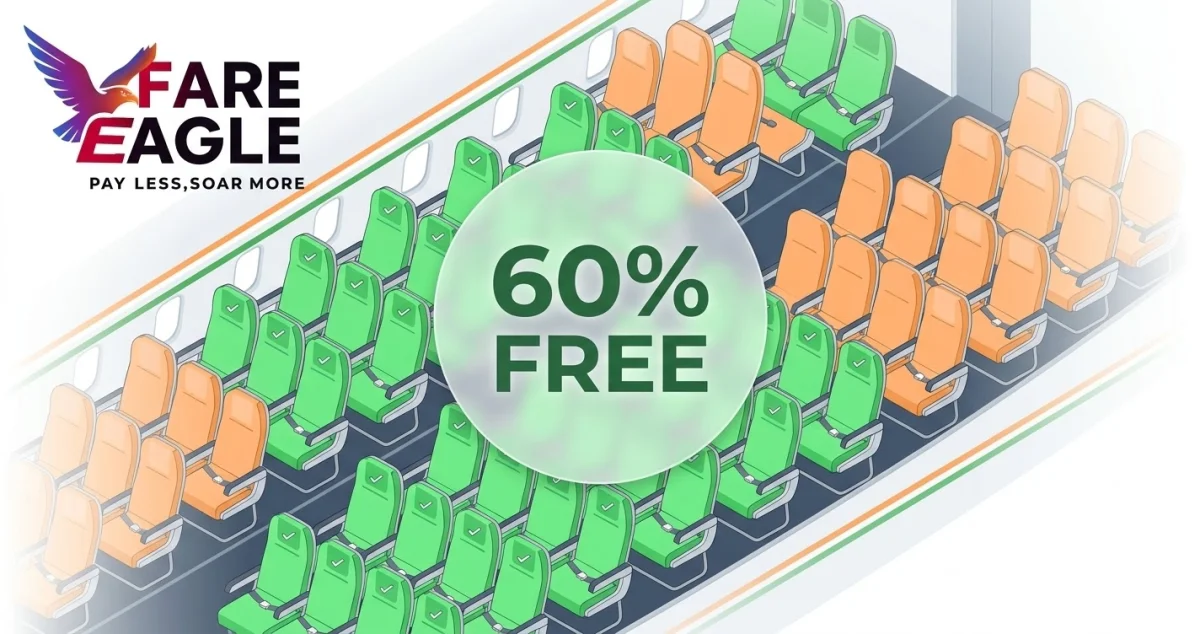
On March 18, 2026, India's Ministry of Civil Aviation issued a landmark directive through the DGCA (Directorate General of Civil Aviation) that fundamentally changes how airlines sell seats on domestic flights. The headline: at least 60% of seats on every flight must now be available for free selection — no extra charge.
Here's a complete breakdown of what changed, why it matters, and how it affects your next booking.
The Big Change: 60% of Seats Are Now Free
Until this rule, most Indian carriers — especially low-cost airlines like IndiGo, SpiceJet, and Go First — had moved to a model where nearly every seat came with a price tag. The "free" options were typically a handful of middle seats at the back of the plane. Window, aisle, front rows, and extra legroom? All paid.
Some airlines were charging for up to 80% of their cabin. Passengers were essentially being nudged into paying just to avoid getting stuck in the last row.
The new rule changes this. Airlines operating domestic flights in India must now ensure that a minimum of 60% of all seats on every aircraft are available for selection without any additional seat fee. The remaining 40% — typically premium seats like extra legroom, exit rows, and front-of-cabin — can still be monetised.
Families Must Be Seated Together
This was one of the most common complaints from Indian travellers: book tickets for your family on the same PNR, and the system would scatter everyone across the plane — unless you paid for seat selection.
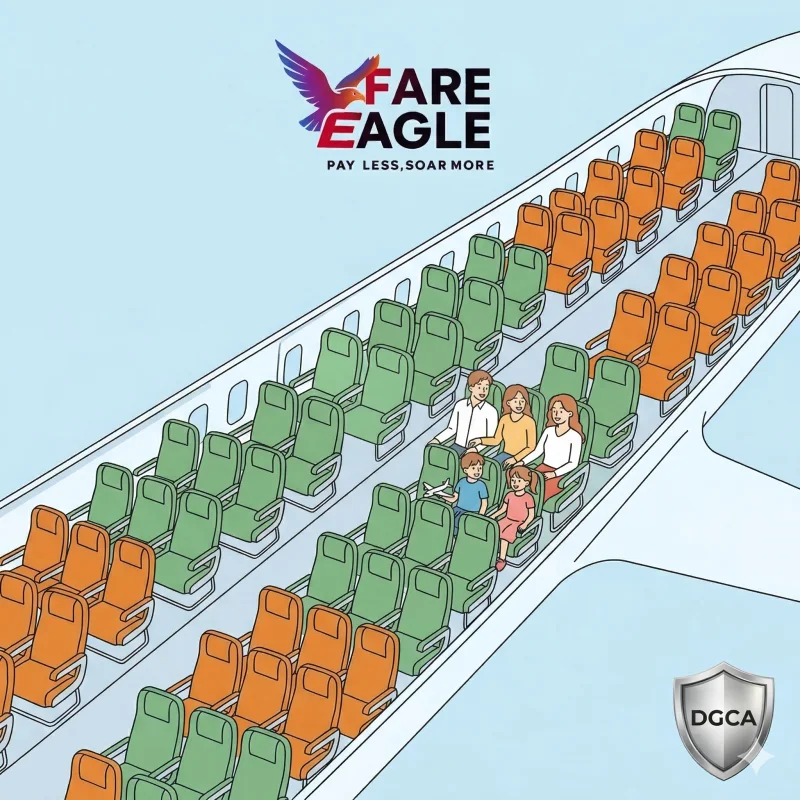
The new directive fixes this. Passengers travelling on the same PNR (booking reference) must be seated together, preferably in adjacent seats, at no extra cost. This applies to families, groups, and anyone booked together.
For families with children under 12, the rule specifically requires that at least one parent or guardian be seated next to the child — a reinforcement of the 2024 child seating rule that many airlines had been inconsistently following.
What Else Changed?
The DGCA directive goes beyond just seat selection. Here's what else is now required:
- Sports equipment and musical instruments: Airlines must publish clear, transparent pricing and handling policies. No more "surprise" charges at the check-in counter.
- Pet carriage: Airlines must have explicit, published policies for travelling with pets — including costs, safety requirements, and cabin vs. cargo rules.
- Passenger rights display: Airlines must prominently display passenger rights on their websites, apps, booking platforms, and airport counters. This includes rights related to delays, cancellations, and denied boarding.
- Regional language communication: All passenger entitlements must be communicated in regional languages — not just English and Hindi — to ensure accessibility across India's diverse linguistic landscape.
Why This Matters
India is now the world's third-largest domestic aviation market, with airports handling over 5 lakh (500,000) passengers every single day. The growth of low-cost carriers made flying accessible to millions of Indians who had never flown before. But along with affordable base fares came an avalanche of "unbundled" charges — seat fees, baggage fees, meal fees — that often made the final price significantly higher than advertised.
The seat fee was particularly contentious because it felt like paying for something that should come with the ticket: a place to sit.
This directive signals a more interventionist DGCA, willing to step into commercial practices when they cross the line from "optional upgrade" to "hidden cost." Industry analysts expect this to be the beginning, not the end, of regulatory action on airline ancillary fees.
How Will Airlines Respond?
Let's be realistic — airlines aren't going to absorb the lost revenue quietly. IndiGo alone reported ancillary income (seat fees, baggage, meals) of approximately ₹2,446 crore in Q3 FY26, representing about 10% of their total revenue.
The most likely industry responses:
- Slightly higher base fares to compensate for reduced ancillary income.
- More aggressive pricing on the remaining 40% of premium seats.
- New bundled products — "comfort packs" combining preferred seats, baggage, and meals at a single price.
- Better check-in flows — booking interfaces will need to be redesigned to clearly show the free vs. paid seat map.
For passengers, the net effect should still be positive. Even if base fares go up marginally, the elimination of mandatory seat fees for 60% of the cabin removes a significant pain point.
What This Means for Your Next FareEagle Booking
When you book a flight on FareEagle, here's what to expect as airlines implement these changes:
- More free seat options during the add-ons step — you'll see a larger selection of seats available at ₹0.
- Family bookings automatically seated together — if everyone is on the same PNR, the airline must assign adjacent seats.
- Clearer seat maps — airlines will need to clearly distinguish between free and paid seats, eliminating the "dark pattern" nudges that made it seem like all seats cost extra.
- No change needed from your side — we'll update our seat selection interface as airlines roll out the changes to their systems.
The Bottom Line
This is a genuinely passenger-friendly move. For years, Indian travellers have watched basic seat selection become a profit centre for airlines. The 60% free seat mandate doesn't eliminate all charges — airlines can still monetise premium seats — but it ensures that a majority of the cabin is accessible without additional cost.
Combined with the same-PNR family seating requirement and the push for transparency in sports equipment, pet, and passenger rights policies, this is one of the most comprehensive passenger protection directives the DGCA has issued.
The next time you book a flight, you should have more choices, fewer surprise charges, and a better chance of sitting next to the people you're travelling with.
Book your next flight on FareEagle — we compare fares across 100+ airlines so you always get the best deal, with full transparency on every charge.