There's a billion-dollar airport in southern Sri Lanka that has been called one of the world's emptiest. It was built to handle a million passengers a year. In 2025, it handled about 140,000. Its biggest tenants recently have been Russian charter airlines flying in from Siberian cities most people have never heard of.
Now, amid the worst disruption to Middle Eastern aviation in decades, that airport might be about to get the busiest it has ever been.
What's Happening
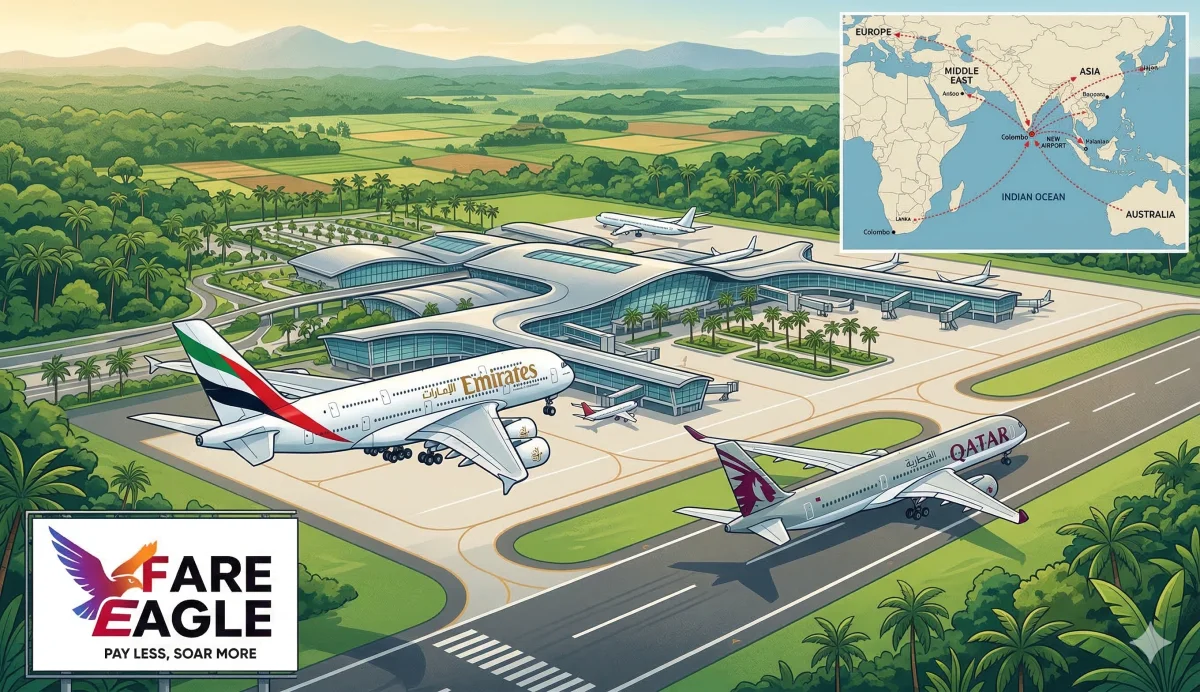
The Sri Lankan government has initiated preliminary discussions with Emirates and Qatar Airways about using Mattala Rajapaksa International Airport (HRI) as a temporary alternative transit hub.
Both airlines have reportedly expressed strong interest in repositioning some of their operations to the southern Sri Lankan airport. The talks come as the ongoing conflict in the Middle East — triggered by military escalations in late February 2026 — has forced mega-hubs like Dubai, Doha, and Abu Dhabi to suspend or drastically reduce operations.
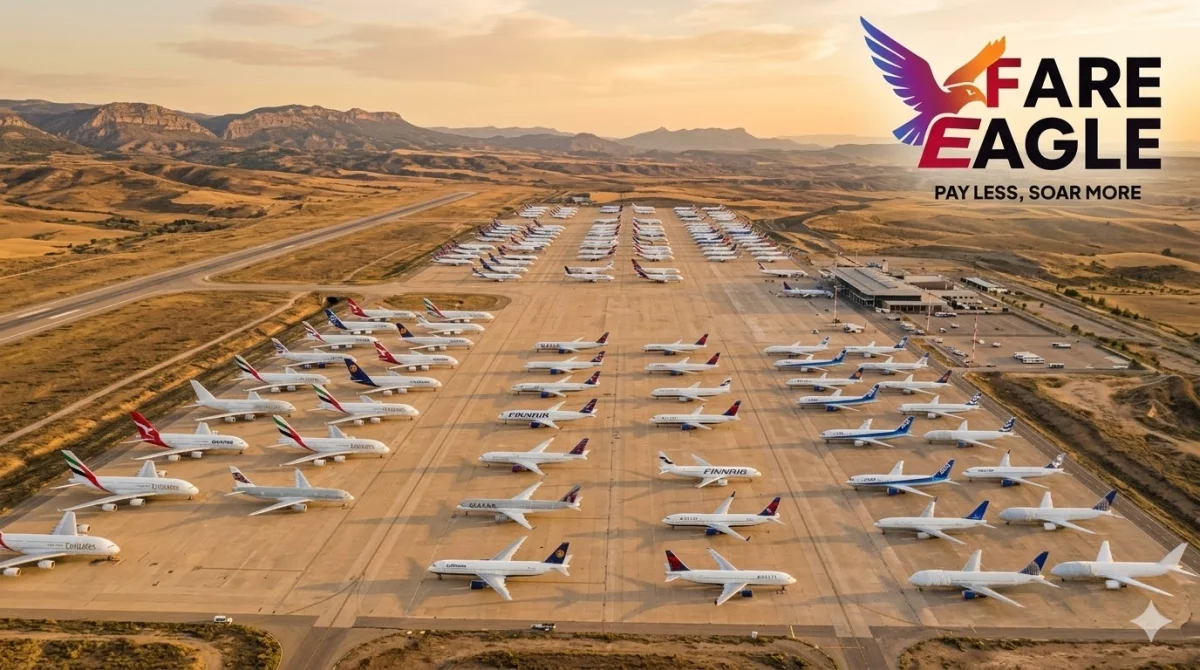
Over 30,000 flights have been cancelled since the conflict began, stranding more than a million passengers worldwide. Emirates, which operates from the world's busiest international airport (Dubai), scaled back to a limited schedule serving roughly 75 destinations in the initial weeks.
Why Mattala?
On paper, Mattala is a surprisingly strong candidate:
- Geography: It sits directly along major Indian Ocean east-west aviation corridors — the same routes that Emirates and Qatar use to connect Europe, Africa, Southeast Asia, and Australia. Critically, it's far south of the conflict zone over the Persian Gulf and Arabian Peninsula.
- Runway: A 3,500-metre runway capable of handling the Airbus A380, the largest passenger aircraft in the world — and a mainstay of the Emirates fleet.
- Capacity: A 12,000-square-metre passenger terminal designed for 1 million passengers annually, scalable to 5-6 million. Right now, almost all of that capacity is sitting empty.
- Neutrality: Sri Lanka has a longstanding policy of political neutrality, making it a stable operating environment during regional conflicts.
When a massive percentage of Emirates' network is connecting passengers from Europe to Asia and Australia, the geography of a hub in southern Sri Lanka actually makes sense. It's not as far-fetched as it sounds.
The "Ghost Airport" Backstory
Mattala Rajapaksa International Airport opened in 2013 as Sri Lanka's second international airport. It cost over $200 million to build and was meant to serve the country's southern region, support tourism to nearby Yala National Park and Hambantota, and act as a relief valve for congested Colombo.
It didn't work out. Airlines didn't come. Passenger numbers remained dismal. At one point, the airport was so empty that wild elephants were reportedly wandering onto the runway. The media dubbed it the "world's emptiest airport," and it became a symbol of wasteful infrastructure spending.
A 30-year management contract was awarded to Shaurya Aeronautics, an India-Russia joint venture, in 2024 to try to revitalise the facility. But usage remained minimal — until now.
The Challenges Are Real
As compelling as the geography is, turning Mattala into a functional hub for two of the world's largest airlines would be an enormous logistical challenge:
- Ground infrastructure: Handling hundreds of daily widebody movements requires ground support equipment, catering facilities, baggage systems, and trained staff that don't currently exist at Mattala's scale.
- Aviation fuel: Sri Lanka has historically struggled with jet fuel supply. SriLankan Airlines has had to make fuelling stops in India during periods when the country ran low on foreign reserves for oil imports. Supplying enough Jet A-1 for Emirates A380s running daily would be a massive undertaking.
- Hotels and accommodation: Mattala is in rural southern Sri Lanka. There isn't a hotel ecosystem anywhere close to what transit crew and passengers would need. Hambantota has some options, but nothing at the scale of Dubai or Doha.
- Speed: Even if both airlines wanted to move tomorrow, the ramp-up time for ground operations, catering contracts, fuel supply chains, and regulatory approvals would take weeks or months — by which time the conflict may have shifted.
What Other Countries Are Doing
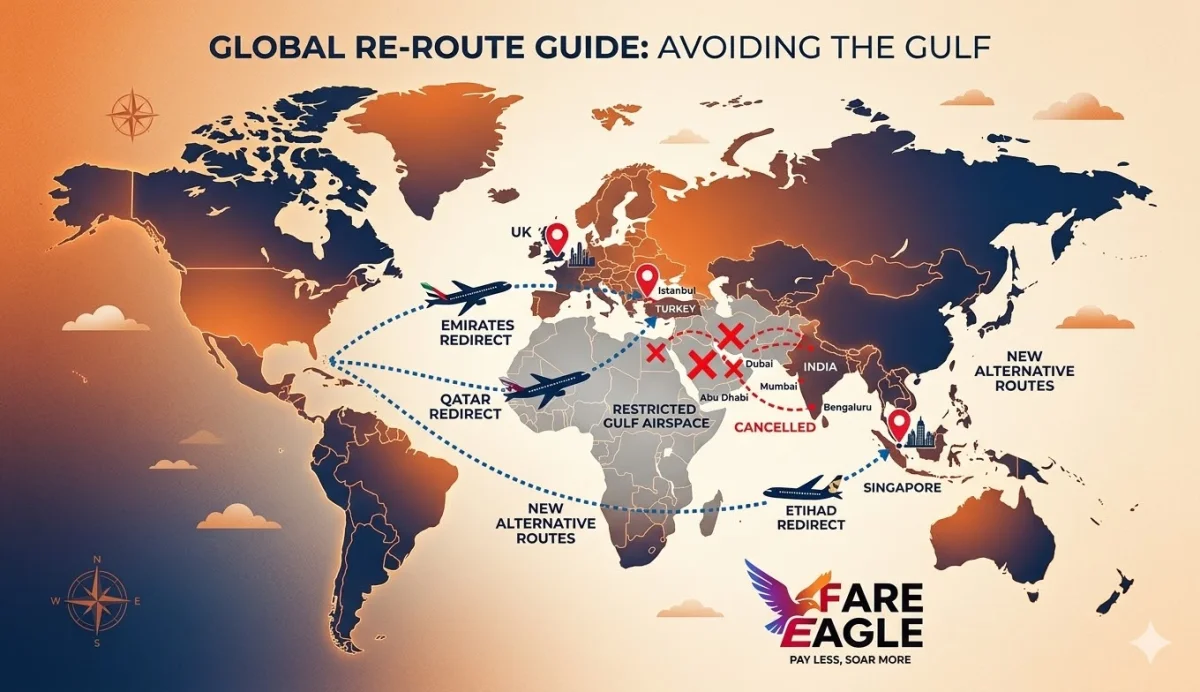
Sri Lanka isn't the only country positioning itself as a Middle East alternative. Singapore, India, Thailand, Egypt, and Turkey are all in the conversation. Istanbul's airport, which remains open with unrestricted Turkish airspace, has absorbed significant rerouted traffic — though it's becoming congested from the volume.
India's airports — particularly Delhi, Mumbai, and the new Navi Mumbai International — are natural candidates given the country's proximity to the Gulf and its booming domestic aviation market. Indian carriers like Air India and IndiGo are already seeing increased demand on routes that previously connected through Dubai and Doha.
What This Means for Indian Travellers
If you're an Indian traveller who typically flies through Dubai or Doha to reach Europe, Australia, or Southeast Asia, the Middle East disruption affects you directly. Here's what to know:
- Fares on alternative routes have spiked. Direct routes avoiding the Gulf — via Singapore, Bangkok, Istanbul, or on European carriers — are seeing significant price increases due to demand.
- Indian carriers are benefiting. Air India's nonstop flights from Delhi and Mumbai to London, New York, San Francisco, and other destinations are seeing higher load factors and premium pricing.
- Booking early is critical. With reduced global capacity, fares are volatile. Lock in your tickets as soon as your plans are confirmed.
- Safe route alternatives exist. If you need to fly internationally right now, we covered the safest routing options in our earlier post — Safe USA-India Flight Routes During the Middle East Conflict.
Will It Actually Happen?
The honest answer: probably not at the scale Sri Lanka is hoping for. Emirates and Qatar Airways are approaching the current crisis as a short-term disruption and expect to resume full operations as conditions stabilise. Setting up a temporary hub in a foreign country is enormously expensive and complex.
But the conversation itself is significant. It shows how fragile the global aviation system is when its biggest hubs are concentrated in a single geopolitically volatile region. And it gives Mattala — for years dismissed as a white elephant — a genuine moment to prove its strategic value.
If the conflict extends for months rather than weeks, don't be surprised if those "preliminary discussions" start moving faster.
Searching for international flights that avoid the Middle East? Compare fares on FareEagle across 100+ airlines — we show you every routing option with transparent pricing.