In aviation, there's a saying: a grounded aircraft is a dying aircraft. Every day a plane sits idle, its systems degrade, seals dry out, components age beyond their service life. After a certain point, most airlines give up and strip the plane for parts.
Air India didn't give up on VT-ALL.
On March 17, 2026, the Boeing 777-300ER registered as VT-ALL — nicknamed "Goa" — officially returned to service. It had been grounded since February 2020. Six years. The last of 30 grounded aircraft that Air India inherited when it returned to the Tata Group in 2022.
Its return marks the end of one of the most ambitious fleet revival programmes in modern aviation history.
What Happened to VT-ALL?
VT-ALL entered the AI Engineering Services Limited (AIESL) MRO facility in Nagpur in early 2020 for a routine C-check — a comprehensive maintenance procedure that normally takes about 28 to 30 days.
Then the pandemic hit. Supply chains froze. Spare parts became impossible to source. The aircraft sat outside the hangar, exposed to the elements, while its components aged and its systems deteriorated. To make things worse, parts from VT-ALL were cannibalised to keep other aircraft flying — a common practice when airlines are desperate for spares, but one that leaves the donor aircraft in even worse shape.
By the time the Tata Group took over Air India in January 2022, VT-ALL had been sitting untouched for two years. It would sit for four more before anyone attempted to bring it back.
The Scale of the Restoration
In April 2025, Air India finally committed to reviving VT-ALL to support its long-haul expansion plans. The aircraft entered the AIESL Nagpur MRO facility in May 2025 for what would become a nose-to-tail rebuild.
The numbers tell the story:
- 3,000+ new components installed — an undertaking rarely seen outside of deep structural overhauls
- 4,000+ maintenance tasks completed
- 80 mandated modifications, including the complex Longeron Modification — a critical structural reinforcement for aging 777 airframes
- Complete engine replacement — both engines, plus the Auxiliary Power Unit (APU), inlet and fan cowls, and thrust reverser cowls
- Full systems rebuild — air conditioning, landing gear, hydraulics, oxygen system, avionics, and engine systems were essentially reconstructed from scratch
- 3,500 man-hours invested in the restoration
Every part replacement, system restoration, and structural repair went through stringent testing, documentation, and regulatory oversight by the DGCA, with technical guidance from Boeing. Engineering teams worked nearly round the clock.
The Test Flight
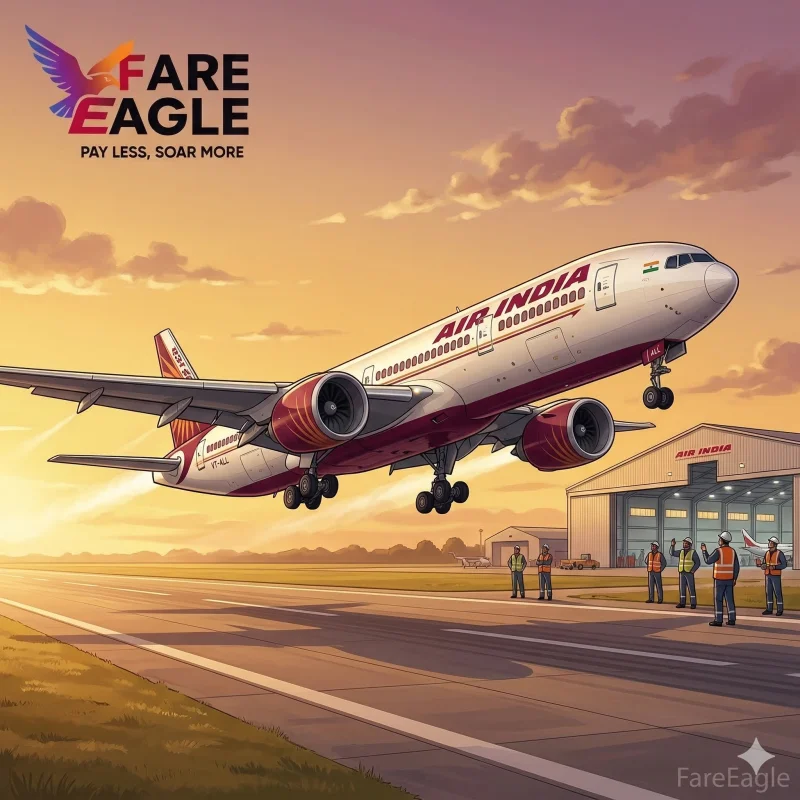
On March 8, 2026, VT-ALL took to the skies for the first time in six years. The test flight was piloted by Captain Arvind Singh and Captain Anny Divya — who previously made history as India's youngest commander to captain a Boeing 777.
The aircraft flew from Nagpur, reaching a maximum altitude of 39,000 feet while engineers and crew evaluated onboard systems including the oxygen release system and other critical components. The test was completed without any technical issues.
A video from the test flight went viral on social media, showing workers and staff chanting "Ganpati Bappa Morya" as the widebody jet lifted off — a moment that captured the emotional weight of what they had accomplished.
Following the successful test flight, VT-ALL received the Airworthiness Review Certificate (ARC) from DGCA — the mandatory safety certification required before any aircraft can enter commercial service.
Why This Matters: The Bigger Picture
VT-ALL wasn't just another aircraft coming back online. It was the last of 30 grounded planes that the Tata Group inherited when they took over Air India.
When privatisation happened in 2022, Air India's fleet of 113 aircraft included 30 widebody and narrowbody jets that had been sitting idle for years — untouched, unserviced, many stripped for parts. Reviving these assets became one of the airline's top priorities, and the completion of VT-ALL's restoration closes that chapter entirely.
For context: Air India has placed orders for 470 new aircraft from Boeing and Airbus — one of the largest aircraft orders in aviation history. But with global supply chain delays affecting both manufacturers, having every existing aircraft operational is critical to maintaining route expansion in the meantime.
What's Next for VT-ALL?
The aircraft is expected to be deployed on high-demand long-haul routes. Air India has already announced plans to upgauge its Delhi-Melbourne service from the Boeing 787 to the Boeing 777-300ER, reintroducing First Class suites on the Australia route.
Starting in 2027, VT-ALL and the rest of the Boeing 777 fleet will undergo a full cabin retrofit as part of Air India's $400 million cabin upgrade programme. The retrofit will introduce:
- New seats across all classes
- Modern in-flight entertainment systems
- Updated cabin interiors and amenities
- Air India's new livery
When the retrofit is complete, VT-ALL will be virtually indistinguishable from a new aircraft — a remarkable transformation for a plane that spent six years as what industry observers called a "ghost plane."
A Win for Indian Aviation Engineering
The restoration of VT-ALL is also a win for India's MRO (Maintenance, Repair, and Overhaul) capabilities. The work was done entirely at the AIESL facility in Nagpur, demonstrating that Indian MRO operations can handle complex widebody restorations that would typically be sent overseas.
The success of this project involved seamless coordination across Air India's base maintenance, planning, technical services, procurement and supply chain, Project Management Office, powerplant teams, Continuing Airworthiness Management Organisation (CAMO), and quality assurance — a collaborative effort that the airline says was completed in record time.
The Bottom Line
Six years grounded. 3,000+ parts replaced. 4,000+ tasks completed. 80 mandated modifications. Two new engines. A complete systems rebuild. And now, VT-ALL flies again.
It's not just an aircraft returning to service. It's the final chapter of Air India's fleet revival — and the opening chapter of its transformation into a world-class carrier.
Planning a trip? Compare Air India fares alongside 100+ other airlines on FareEagle — transparent pricing, instant confirmation, zero hidden fees.