Twelve sacred shrines. Twelve manifestations of light. Spread across nine Indian states from the snow-capped Himalayas to the shores of the Indian Ocean, the 12 Jyotirlingas represent the most revered pilgrimage circuit in Hinduism.
This guide covers every detail you need to plan your Jyotirlinga yatra in 2026: precise locations, darshan timings, how to reach by air, train, and road, the best months to visit, what to expect at each temple, and practical tips from pilgrims who have completed the circuit.
What is a Jyotirlinga?
The word Jyotirlinga comes from two Sanskrit words — Jyoti (light/radiance) and Linga (the sacred symbol of Lord Shiva). According to the Shiva Purana, Lord Brahma and Lord Vishnu once argued about who was supreme. To settle the dispute, Lord Shiva appeared as a blazing pillar of light that pierced through the three worlds — with no beginning and no end.
The twelve locations where this divine light manifested are the Jyotirlingas. They are considered swayambhu — self-manifested — and each carries a unique spiritual significance. Hindu scriptures state that a devotee who visits all twelve attains moksha (liberation from the cycle of birth and death).
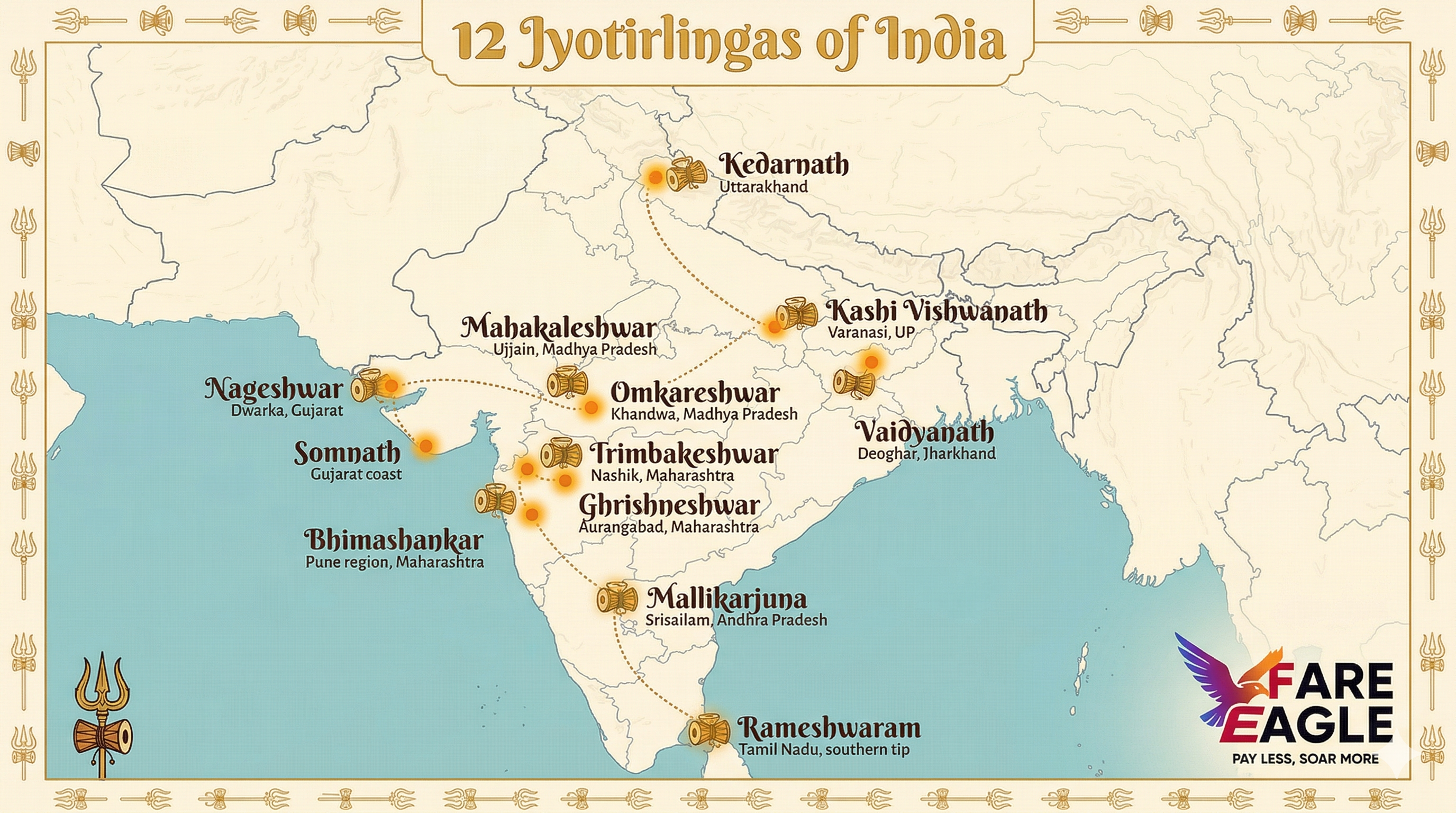
Quick Reference — All 12 Jyotirlingas
| # | Jyotirlinga | Location | State | Best Time |
|---|---|---|---|---|
| 1 | Somnath | Veraval, Gujarat | Gujarat | Oct–Feb |
| 2 | Mallikarjuna | Srisailam, AP | Andhra Pradesh | Oct–Feb |
| 3 | Mahakaleshwar | Ujjain, MP | Madhya Pradesh | Oct–Mar |
| 4 | Omkareshwar | Khandwa, MP | Madhya Pradesh | Oct–Mar |
| 5 | Vaidyanath | Deoghar, Jharkhand | Jharkhand | Oct–Mar |
| 6 | Bhimashankar | Sahyadri, Maharashtra | Maharashtra | Jul–Feb |
| 7 | Rameshwaram | Rameshwaram Island, TN | Tamil Nadu | Oct–Apr |
| 8 | Nageshwar | Dwarka, Gujarat | Gujarat | Oct–Mar |
| 9 | Kashi Vishwanath | Varanasi, UP | Uttar Pradesh | Oct–Mar |
| 10 | Trimbakeshwar | Nashik, Maharashtra | Maharashtra | Jul–Mar |
| 11 | Kedarnath | Rudraprayag, Uttarakhand | Uttarakhand | May–Oct |
| 12 | Ghrishneshwar | Ellora, Aurangabad | Maharashtra | Oct–Mar |
Continue reading below for detailed guides on each Jyotirlinga — including the legendary stories, darshan timings, travel logistics, and insider tips.
1. Somnath Jyotirlinga — Gujarat
The Eternal Shrine That Refused to Fall
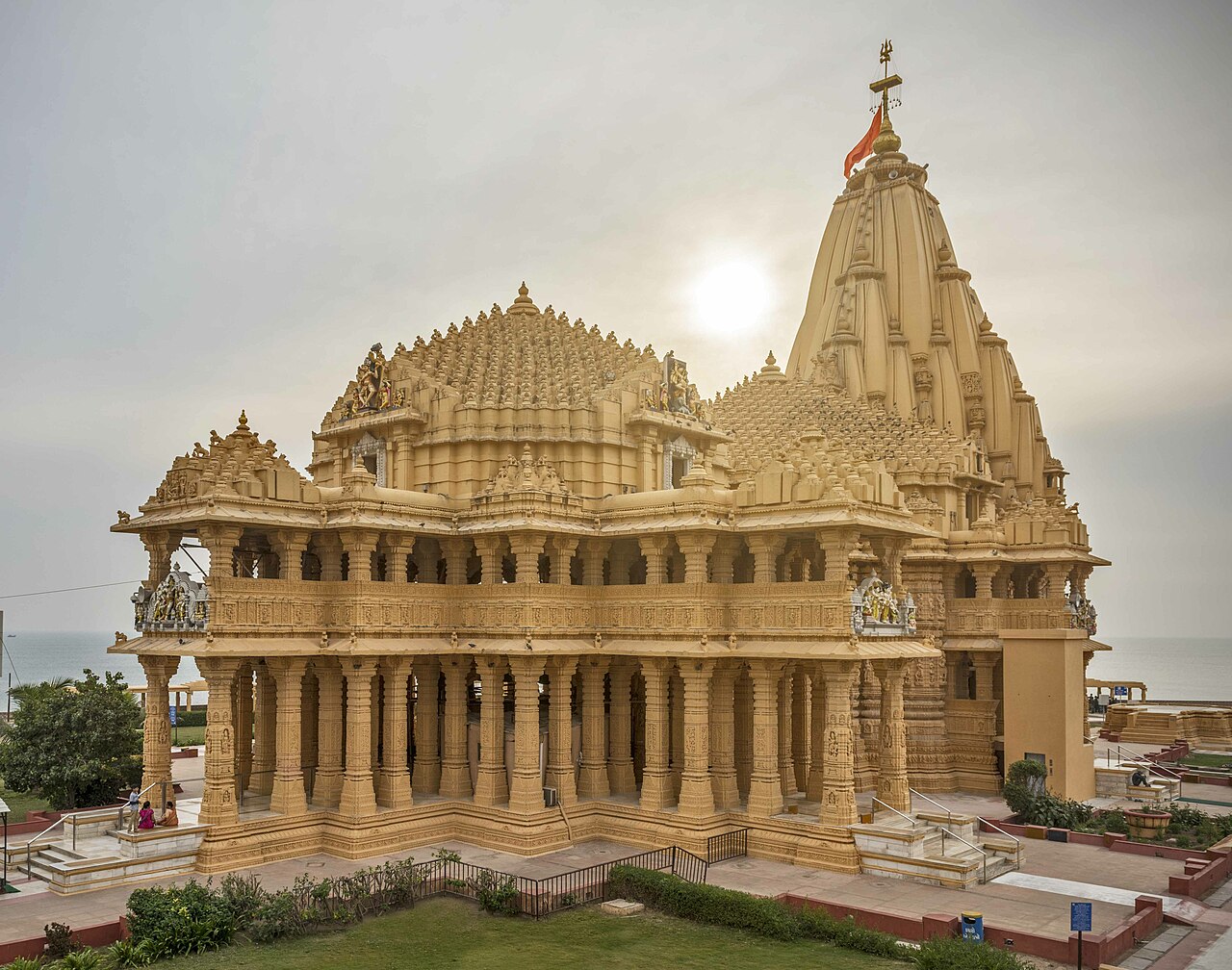
Standing on the western coast of Gujarat where the Arabian Sea meets the shore, Somnath is the first of the 12 Jyotirlingas and arguably the most resilient temple in Indian history. It has been destroyed and rebuilt at least 17 times — by Mahmud of Ghazni in 1024 CE, by Allauddin Khilji, by the Portuguese, and by others — yet it stands today in stunning Chalukya-style architecture, a testament to unbroken faith.
The origin story is poetic: Chandra (the Moon God) married all 27 daughters of King Daksha but favoured only Rohini. The enraged Daksha cursed Chandra to lose his brilliance. Chandra worshipped Lord Shiva here for thousands of years until Shiva appeared and restored his light — but only partially, creating the waxing and waning cycle we see every month. This is why the temple is called Somnath — "Lord of the Moon."
Darshan Timings: 6:00 AM – 10:00 PM
Special Experience: The "Joy Somnath" sound and light show every evening (8:00 PM – 9:00 PM) narrates the temple's history against the backdrop of the illuminated shrine and the ocean.
How to Reach Somnath
- By Air: Nearest airport is Diu (85 km) or Rajkot (164 km). Ahmedabad airport (400 km) has the most flight options.
- By Train: Veraval Railway Station is just 6 km from the temple. Direct trains from Ahmedabad, Mumbai, and Rajkot.
- By Road: Well-connected by state highways. Regular buses from Ahmedabad (7 hrs), Junagadh (1.5 hrs), and Dwarka (4 hrs).
Pro Tip: Combine Somnath with Dwarka (Nageshwar Jyotirlinga) — they're only 230 km apart. You can cover both Gujarat Jyotirlingas in a 3-day trip.
2. Mallikarjuna Jyotirlinga — Andhra Pradesh
The Kailash of the South
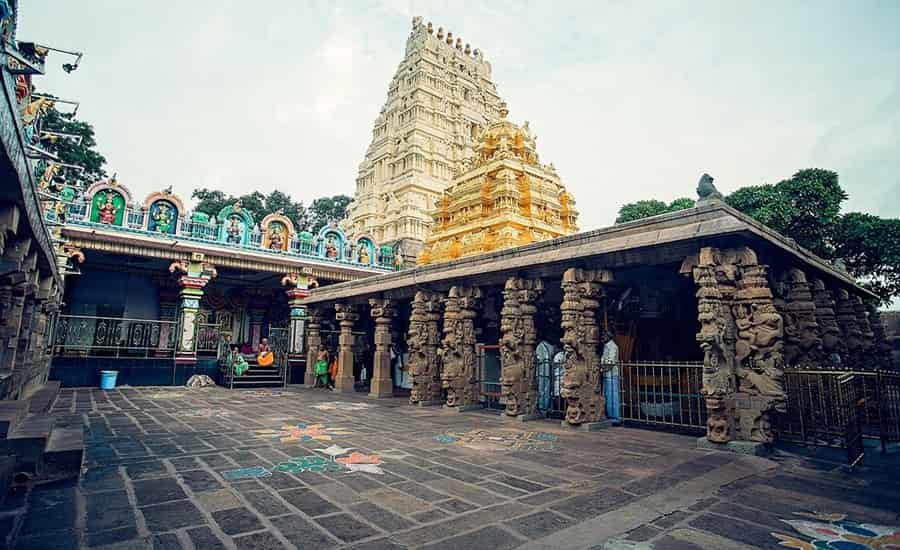
Perched atop the sacred Shri Shaila Mountain along the banks of the Krishna River, Mallikarjuna is the only Jyotirlinga in South India that also doubles as a Shakti Peetha. Here, Lord Shiva resides as Mallikarjuna and Goddess Parvati as Bhramaramba — making this one of the few places where both divine energies coexist.
The legend says Kartikeya (Shiva's elder son) was upset that his younger brother Ganesh married before him. He left for Srisailam in anger. Shiva and Parvati followed him here to console their son — and chose to stay, establishing this sacred abode.
Darshan Timings: 4:30 AM – 3:30 PM, 6:00 PM – 9:00 PM
Special Experience: This is the only Jyotirlinga where devotees are allowed to touch the Lingam directly. The annual Jathra Mahotsavam festival in March draws lakhs of pilgrims.
Dress Code: Men must wear dhoti or pyjama with upper cloth. Women must wear saree or churidar.
How to Reach Srisailam
- By Air: Rajiv Gandhi International Airport, Hyderabad (175 km).
- By Train: Markapur Road Railway Station (80 km). Trains from Hyderabad, Vijayawada, and Chennai.
- By Road: APSRTC buses from Hyderabad (4-5 hrs). The ghat road through Nallamala Forest is scenic but has hairpin bends.
Pro Tip: The dense Nallamala Forest surrounding the temple is a tiger reserve. The Srisailam Dam viewpoint is worth a stop.
3. Mahakaleshwar Jyotirlinga — Madhya Pradesh
Where Time Bows to Shiva
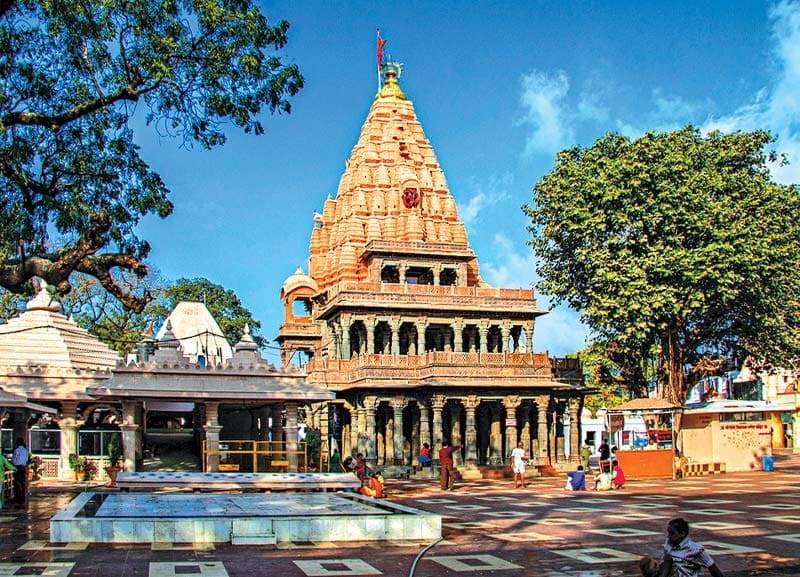
In the ancient city of Ujjain — one of the seven Moksha Puris — stands Mahakaleshwar, widely considered the most powerful Jyotirlinga. The word Mahakal means "Lord of Time" — Shiva here is believed to rule over death itself. This is also the only Jyotirlinga that faces south (dakshinamukhi), which tantric traditions consider extraordinarily powerful.
The Bhasma Aarti at 4:00 AM is one of the most intense spiritual experiences in India. Sacred ash from the cremation grounds is used in the ritual, performed in near-darkness with chanting that reverberates through the underground sanctum.
Darshan Timings: 4:00 AM – 11:00 PM (Bhasma Aarti at 4:00 AM, register online in advance)
How to Reach Ujjain
- By Air: Devi Ahilyabai Holkar Airport, Indore (53 km).
- By Train: Ujjain Junction is just 2 km from the temple. Direct trains from Delhi, Mumbai, Bangalore.
- By Road: Excellent highway from Indore (1.5 hrs).
Pro Tip: Register for the Bhasma Aarti online at least 2-3 days in advance — slots fill up. Combine with Omkareshwar (150 km away) for two Jyotirlingas in one trip.
4. Omkareshwar Jyotirlinga — Madhya Pradesh
The Island Shaped Like Om
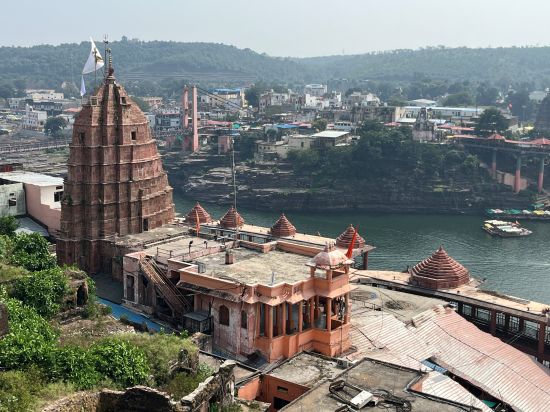
On the sacred Mandhata Island in the Narmada River, the landmass naturally forms the shape of the Hindu symbol OM — giving this Jyotirlinga its name. Two temples stand here: Omkareshwar on the island and Mamleshwar on the southern bank. Devout pilgrims visit both.
The legend tells of a war between gods and demons. When the gods faced defeat, they prayed to Lord Shiva, who appeared as Omkareshwar, defeated the demons, and chose to remain here as a Jyotirlinga.
Darshan Timings: 5:30 AM – 12:20 PM, 4:00 PM – 8:30 PM
How to Reach Omkareshwar
- By Air: Indore Airport (77 km).
- By Train: Omkareshwar Road Railway Station (14 km from the temple).
- By Road: Regular buses from Indore (2 hrs), Ujjain (3 hrs), and Bhopal (4 hrs).
Pro Tip: Take the parikrama (circumambulation) of the entire island — it is about 7 km and takes 3-4 hours on foot. The views of the Narmada are stunning.
5. Vaidyanath (Baidyanath) Jyotirlinga — Jharkhand
The Healer of All Suffering
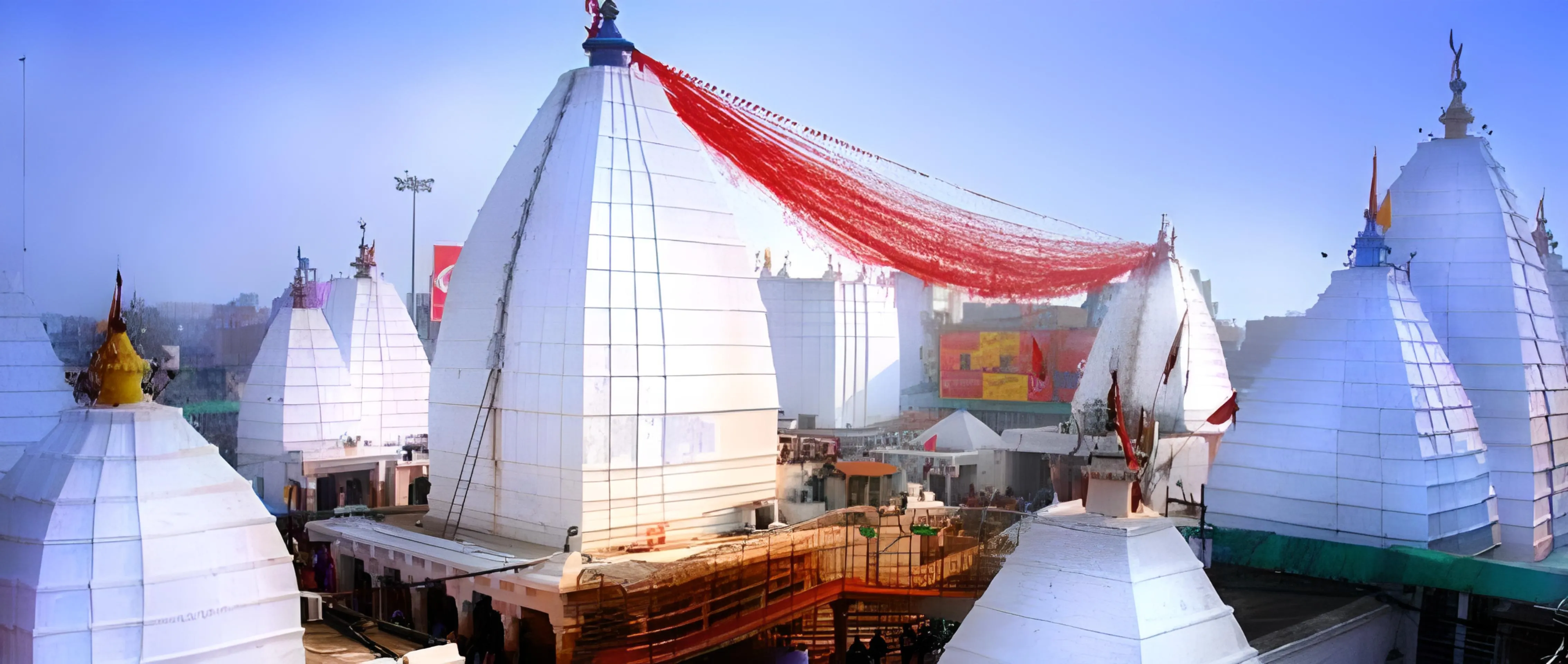
Also called Baba Baidyanath Dham, this Jyotirlinga in Deoghar is believed to grant healing and liberation from suffering. The story involves Ravana himself — the demon king performed extreme penance and tried to carry the Shiva Lingam to Lanka. But it was placed on the ground here and could not be moved again. The complex houses 22 temples within its premises.
During the monsoon month of Shravan (July-August), millions of Kanwariyas walk barefoot carrying Ganges water from Sultanganj (108 km away) to pour over the Lingam — one of the largest annual pilgrim gatherings in the world.
Darshan Timings: 4:00 AM – 3:30 PM, 6:00 PM – 9:00 PM
How to Reach Deoghar
- By Air: Deoghar Airport (12 km) — recently opened with flights from Kolkata and Delhi.
- By Train: Jasidih Junction (8 km) is well-connected to Patna, Kolkata, and Delhi.
- By Road: From Ranchi (255 km), Patna (250 km), or Kolkata (370 km).
6. Bhimashankar Jyotirlinga — Maharashtra
In the Mist-Covered Sahyadris
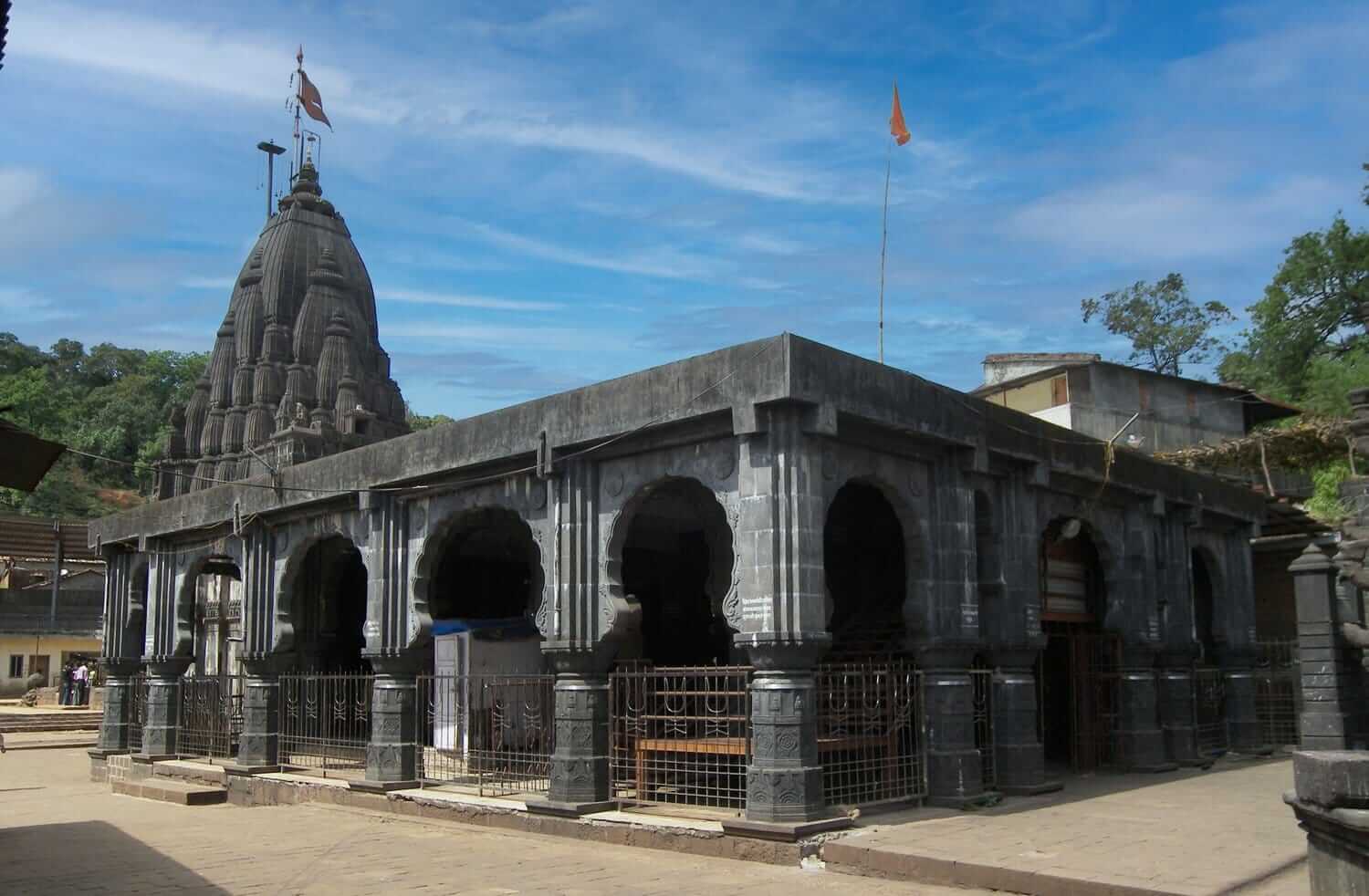
Deep in the Western Ghats of Maharashtra, surrounded by dense forests that are home to the endangered Indian Giant Squirrel, Bhimashankar offers a pilgrimage experience unlike any other. The temple sits at 3,250 feet in the Sahyadri hills, and the journey through the forest — especially during monsoon — feels like walking through clouds.
The temple's Nagara-style architecture in black basalt is striking. The River Bhima originates near this temple, named after the sweat of Shiva's cosmic battle with the demon Tripurasur.
Darshan Timings: 5:00 AM – 9:30 PM
How to Reach Bhimashankar
- By Air: Pune Airport (120 km). Mumbai Airport (180 km).
- By Train: Karjat Railway Station (168 km) or Pune Junction (125 km).
- By Road: From Pune, drive through Manchar and Ghodegaon. The last stretch is a scenic ghat road.
Pro Tip: Visit during monsoon (July-September) for the most dramatic scenery — waterfalls everywhere, clouds below you. Carry rain gear and be prepared for leeches on the trek.
7. Rameshwaram Jyotirlinga — Tamil Nadu
Where Lord Rama Prayed Before the War
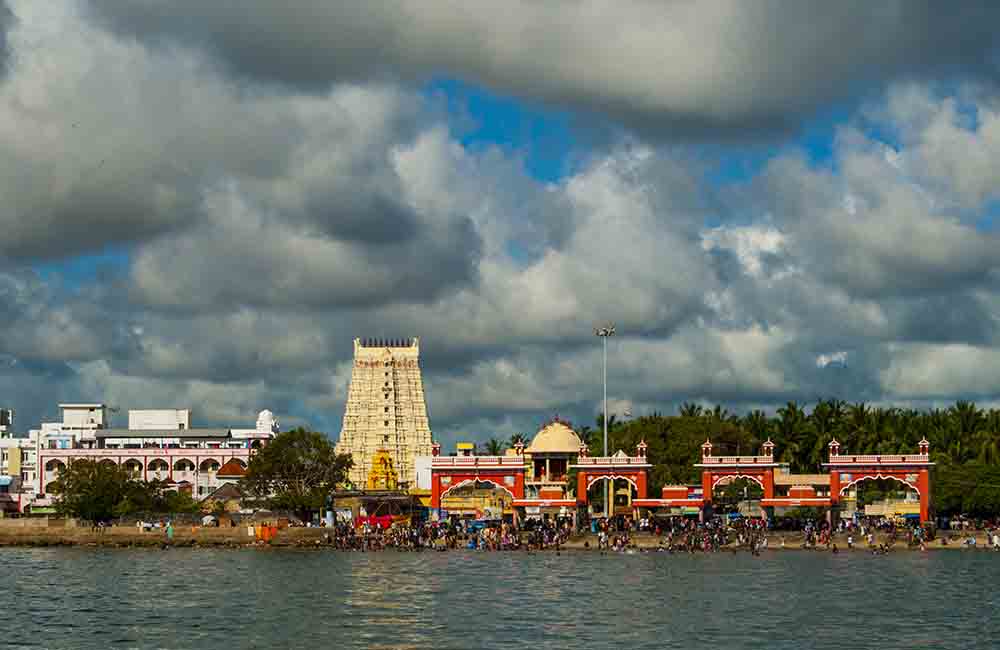
On a coral island off the southeastern tip of India, connected to the mainland by the Pamban Bridge, stands Ramanathaswamy Temple — with the longest corridor of any Hindu temple in the world (1,220 metres of ornately carved pillars). According to the Ramayana, Lord Rama established a Shiva Lingam here before building the bridge to Lanka to rescue Sita.
The temple has 22 sacred wells (theerthams) within its premises, each with water of different taste and temperature. Pilgrims bathe in all 22 as a purification ritual before darshan.
Darshan Timings: 5:00 AM – 1:00 PM, 3:00 PM – 9:00 PM
How to Reach Rameshwaram
- By Air: Madurai Airport (163 km).
- By Train: Rameshwaram Railway Station — the train across Pamban Bridge is a memorable experience.
- By Road: National Highway from Madurai (3.5 hrs).
Pro Tip: The 22-well bath takes 1-2 hours and you will be soaked. Carry extra clothes. The Agni Theertham (sea bath at the temple's east entrance) at sunrise is unforgettable.
8. Nageshwar Jyotirlinga — Gujarat
The Protector Against All Poison
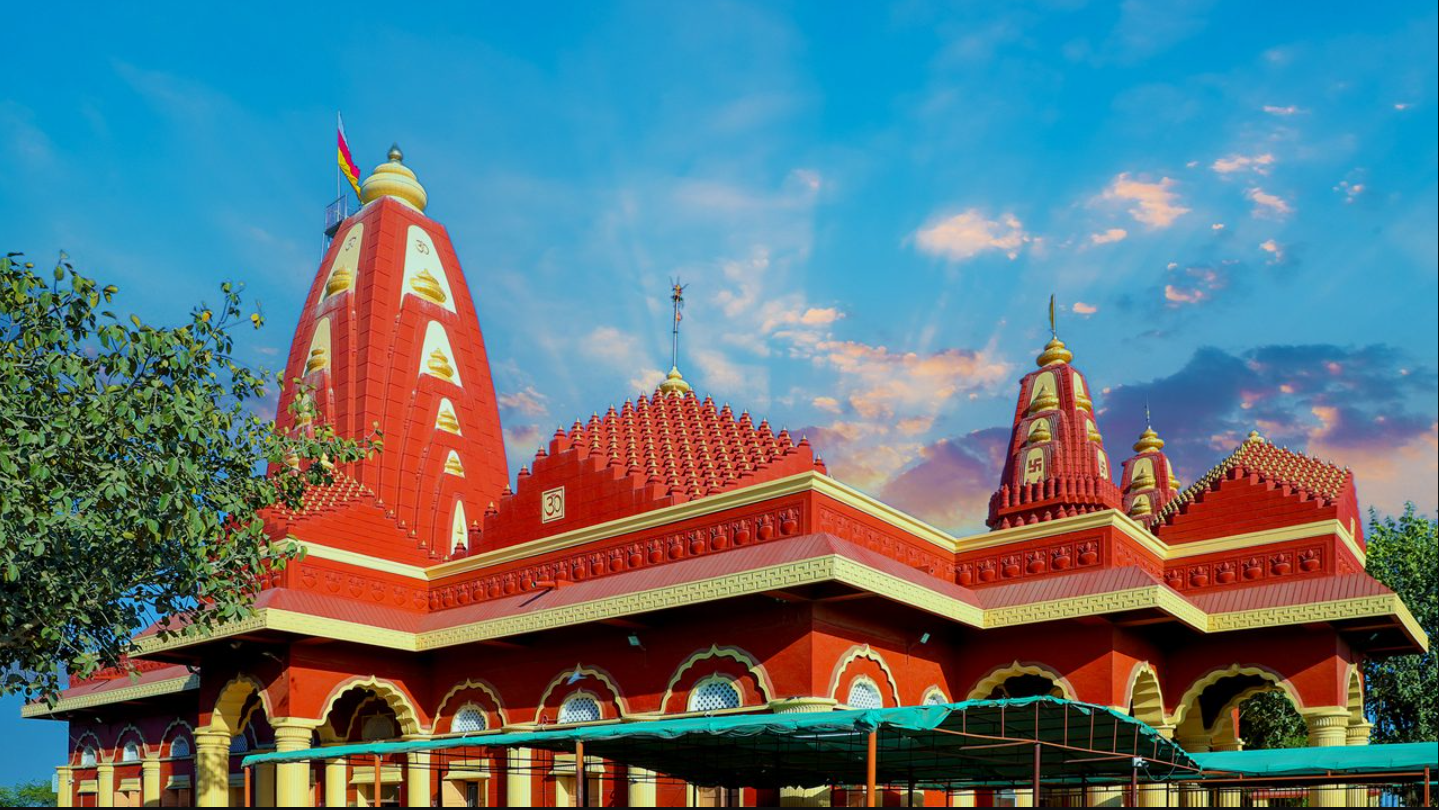
Located between Gomati Dwarka and Bait Dwarka on Gujarat's coast, Nageshwar is known as the protector against all forms of poison — physical and spiritual. The 25-metre tall statue of Lord Shiva in the temple complex is one of the tallest in India.
The legend involves a Shiva devotee named Supriya who was captured by a demon called Daruka. Even in captivity, Supriya continued chanting Shiva's name. Enraged, the demon tried to kill Supriya, but Shiva appeared and destroyed Daruka, establishing himself as Nageshwar.
Darshan Timings: 6:00 AM – 12:30 PM, 5:00 PM – 9:00 PM
How to Reach Nageshwar
- By Air: Jamnagar Airport (45 km).
- By Train: Dwarka Railway Station (18 km).
- By Road: On the highway between Dwarka and Bait Dwarka.
Pro Tip: Combine with Somnath (230 km) and Dwarka's Dwarkadhish Temple for a complete Gujarat pilgrimage circuit. 4-5 days is ideal.
9. Kashi Vishwanath Jyotirlinga — Uttar Pradesh
The Golden Temple of Varanasi
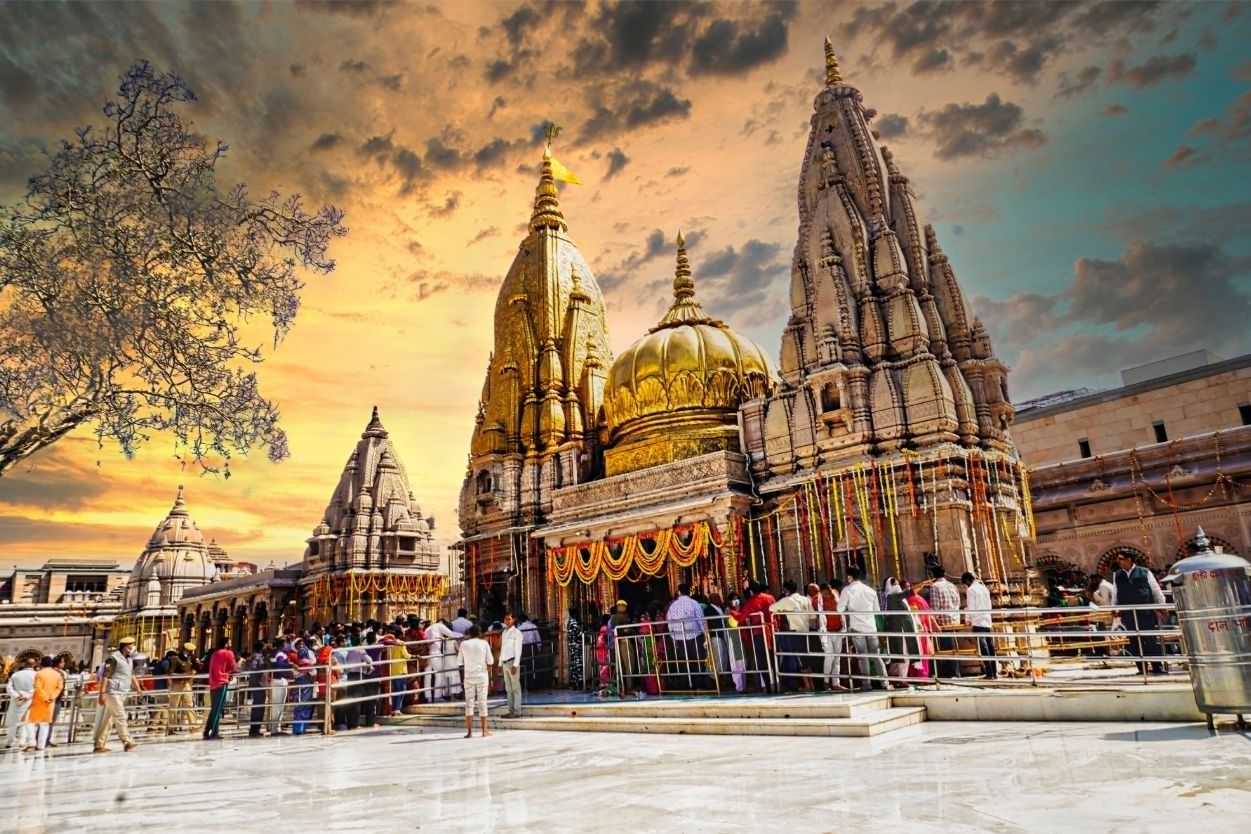
In the world's oldest continuously inhabited city, on the banks of the Ganges, stands the temple that every Hindu aspires to visit at least once. Kashi Vishwanath — literally "Lord of the Universe in Kashi" — has been the spiritual heart of Hinduism for over 3,500 years. The current temple, rebuilt in 1780 by Maharani Ahilyabai Holkar, gleams with 800 kg of gold plating on its dome.
The recently completed Kashi Vishwanath Corridor has transformed the temple complex into a world-class pilgrimage destination — clean, spacious, and directly connected to the Ganga ghats.
Darshan Timings: 2:30 AM – 11:00 PM (Mangala Aarti at 3:00 AM)
How to Reach Varanasi
- By Air: Lal Bahadur Shastri International Airport (26 km). Direct flights from all major cities.
- By Train: Varanasi Junction — among the best-connected cities by rail in India.
- By Road: Connected to Allahabad (120 km), Lucknow (300 km), and Patna (290 km).
Pro Tip: Attend the Ganga Aarti at Dashashwamedh Ghat at sunset. Take a dawn boat ride on the Ganges to see the ghats come alive. Budget 2-3 days for Varanasi.
10. Trimbakeshwar Jyotirlinga — Maharashtra
The Origin of the Godavari
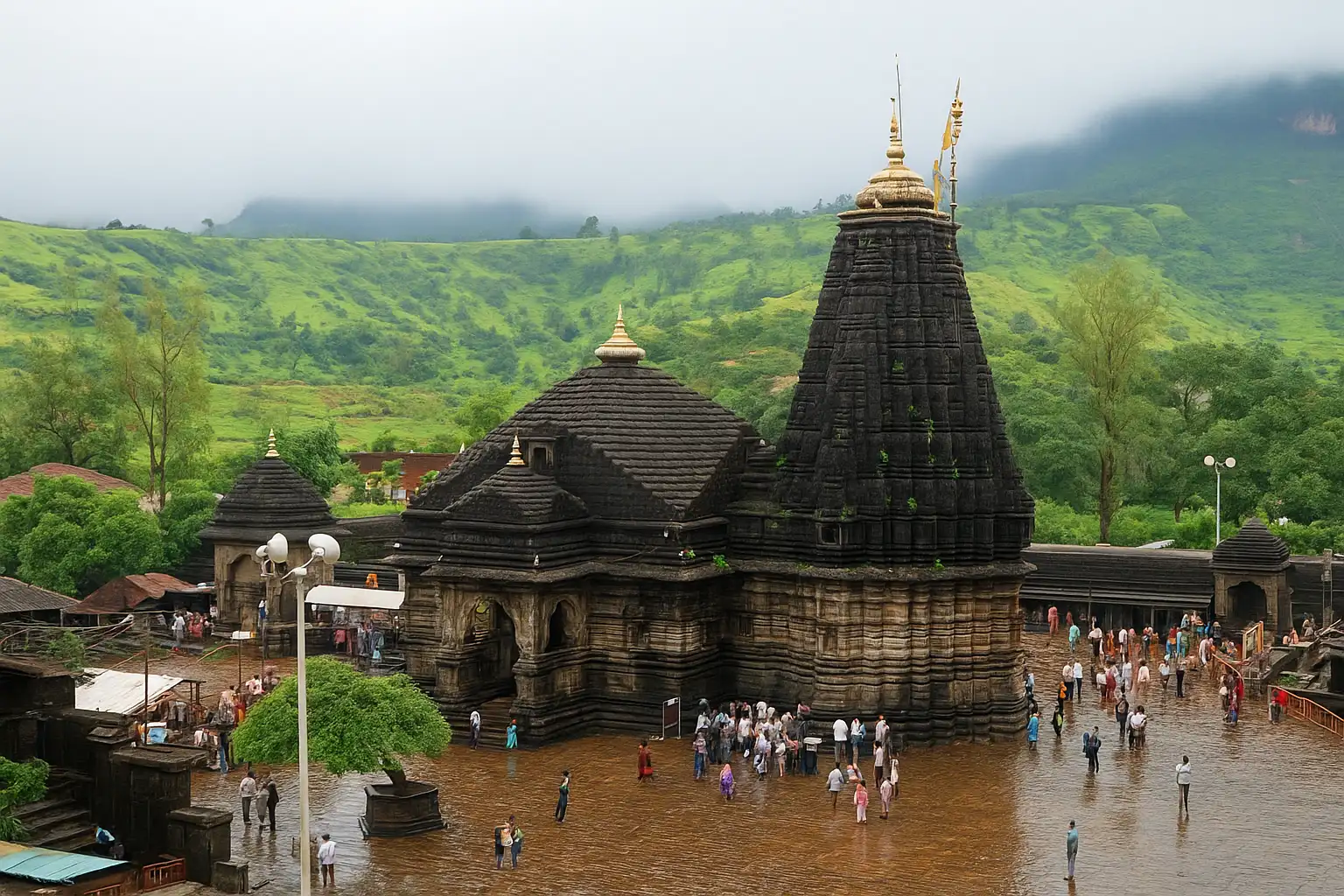
Nestled near the Brahmagiri Mountain, 30 km from Nashik, Trimbakeshwar is unique because its Lingam has three faces representing the Trimurti — Brahma, Vishnu, and Maheshwara. It is also the source of the Godavari River, India's second-longest river.
Every 12 years, the Kumbh Mela is held in Nashik-Trimbakeshwar — one of only four locations in India for this massive gathering of millions.
Darshan Timings: 5:30 AM – 9:00 PM
How to Reach Trimbakeshwar
- By Air: Nashik (Ozar) Airport (35 km) or Mumbai Airport (180 km).
- By Train: Nashik Road Railway Station (35 km).
- By Road: 30 km from Nashik city. Regular local buses and taxis.
Pro Tip: Combine with the Sula and York wine country near Nashik, the Panchvati temples, and the Ajanta-Ellora caves (4 hrs drive).
11. Kedarnath Jyotirlinga — Uttarakhand
God's Address at 3,583 Metres
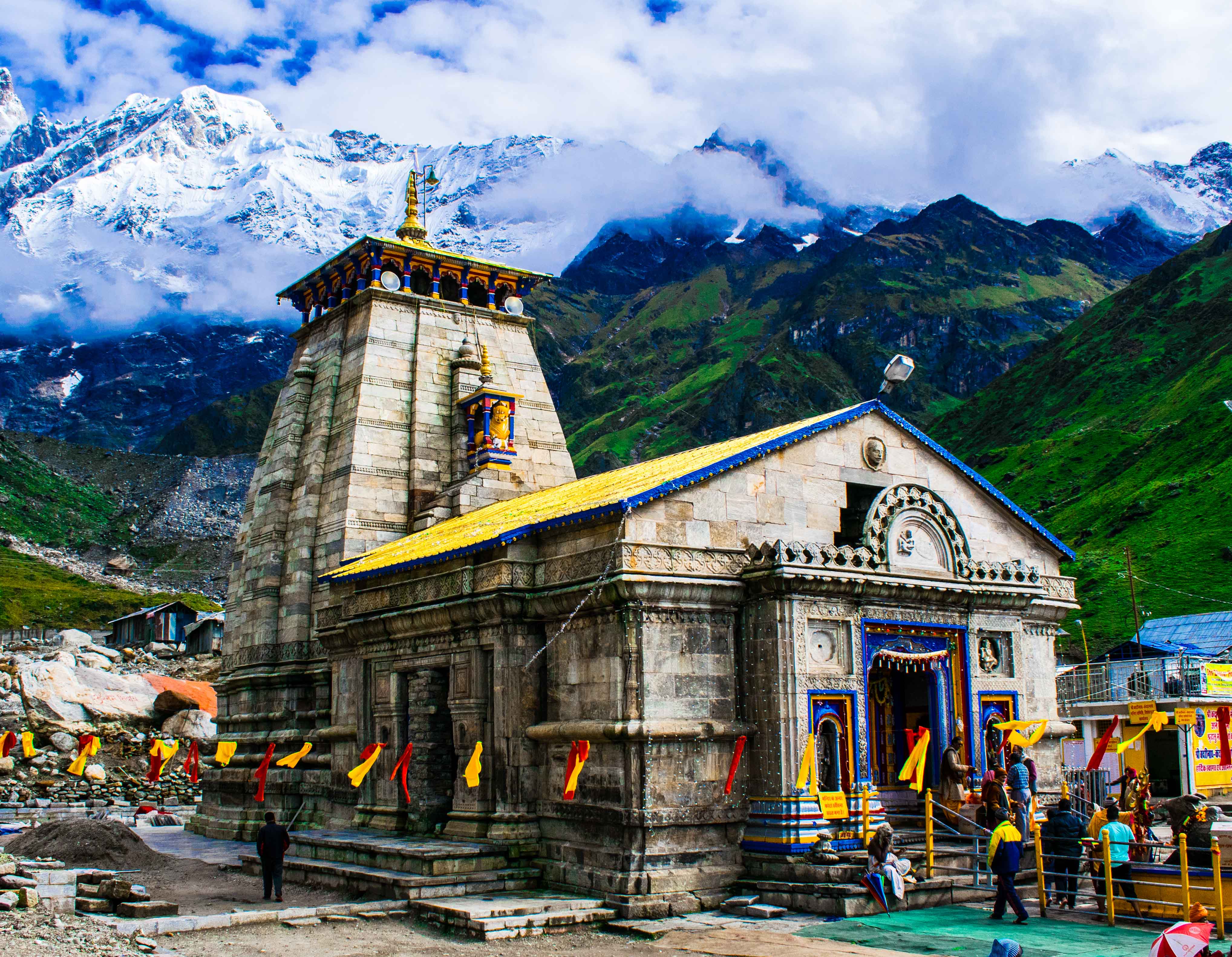
This is the pilgrimage that tests your body and rewards your soul. At 11,755 feet in the Garhwal Himalayas, Kedarnath is the highest and most remote of all 12 Jyotirlingas. The temple, attributed to the Pandavas and rebuilt by Adi Shankaracharya in the 8th century, sits against the backdrop of the Kedarnath Peak (6,940m).
According to legend, the Pandavas sought Shiva's forgiveness after the Kurukshetra war. Shiva, wanting to avoid them, disguised himself as a bull. When Bhima caught the bull, it dived underground — the hump remained above ground and became the sacred Kedarnath Lingam (which is why it has a distinctive triangular shape).
The temple is open only 6 months a year (May to October/November). The journey involves a 16 km trek from Gaurikund (or helicopter ride).
Darshan Timings: 6:00 AM – 3:00 PM, 5:00 PM – 7:30 PM
How to Reach Kedarnath
- By Air: Jolly Grant Airport, Dehradun (240 km). Helicopter services from Phata/Guptkashi/Sirsi (Rs 7,000-12,000 per person, 10-15 min).
- By Train: Rishikesh Railway Station (225 km). Then road to Gaurikund.
- By Road: Drive to Gaurikund via Rishikesh, Devprayag, Rudraprayag, Guptkashi. Then 16 km trek, pony/palki, or helicopter.
Pro Tip: Book helicopter tickets well in advance on the official UCADA website. If trekking, start at 4:00 AM from Gaurikund to avoid afternoon clouds. Carry warm clothing even in summer — temperatures drop below 5 degrees at night. Acclimatize for a day in Guptkashi before the trek.
12. Ghrishneshwar Jyotirlinga — Maharashtra
The Last Jyotirlinga, Next to Ellora's Caves
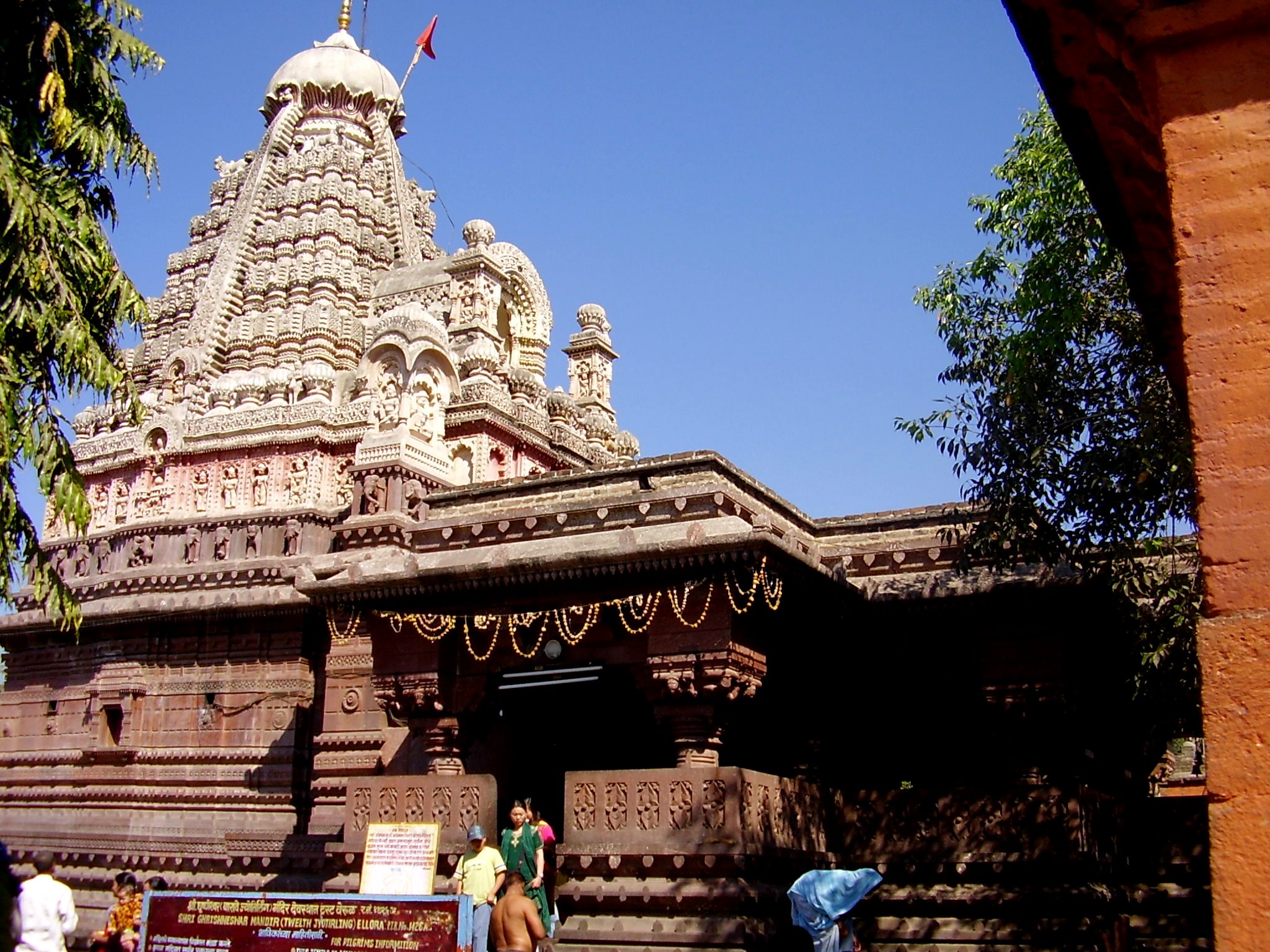
The final Jyotirlinga in the traditional sequence, Ghrishneshwar (also called Grushneshwar) is located just 1 km from the UNESCO World Heritage Ellora Caves near Aurangabad. The temple, built in red stone by Ahilyabai Holkar in the 18th century, features exquisite carvings and a five-tier shikhara.
The legend involves a devout woman named Kusuma whose sons were killed by her jealous co-wife. Kusuma continued her Shiva worship without hatred, and Lord Shiva, moved by her devotion, appeared as Ghrishneshwar and restored her sons to life.
Darshan Timings: 5:30 AM – 9:30 PM
How to Reach Ghrishneshwar
- By Air: Aurangabad Airport (30 km). Flights from Mumbai and Delhi.
- By Train: Aurangabad Railway Station (30 km).
- By Road: Just 1 km from Ellora Caves, 30 km from Aurangabad city.
Pro Tip: Spend the morning at Ghrishneshwar temple, then the afternoon at Ellora Caves (34 caves, including the jaw-dropping Kailasa Temple carved from a single rock). If you have a second day, visit the Ajanta Caves (100 km away).
Planning Your Complete Jyotirlinga Yatra
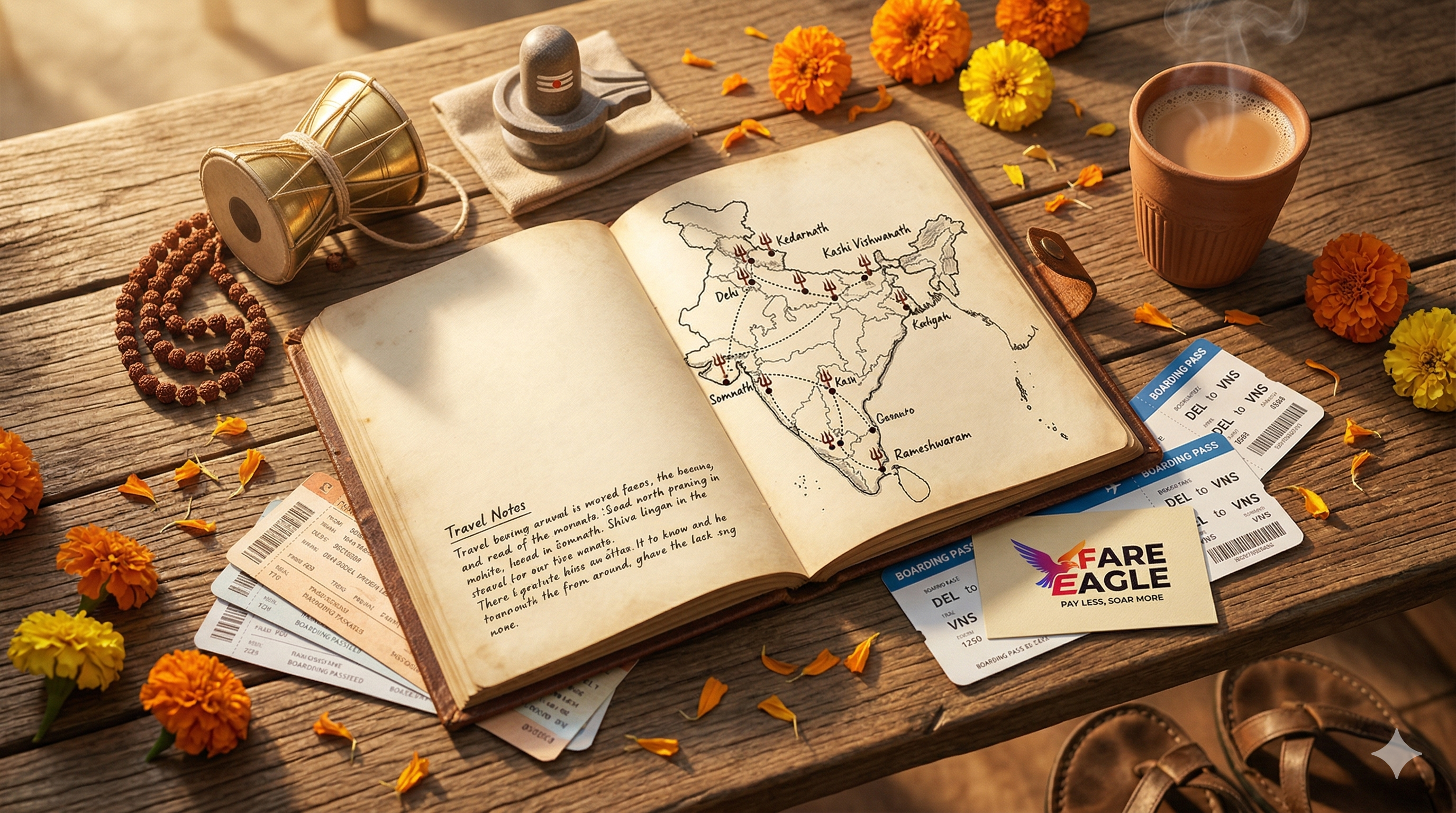
Recommended Route (All 12 in One Trip)
- Somnath (Gujarat) → 230 km →
- Nageshwar (Dwarka, Gujarat) → fly to Pune →
- Bhimashankar (Maharashtra) → 200 km →
- Trimbakeshwar (Nashik, Maharashtra) → 190 km →
- Ghrishneshwar (Aurangabad, Maharashtra) → fly to Hyderabad →
- Mallikarjuna (Srisailam, AP) → fly to Madurai →
- Rameshwaram (Tamil Nadu) → fly to Varanasi →
- Kashi Vishwanath (Varanasi, UP) → train to Deoghar →
- Vaidyanath (Deoghar, Jharkhand) → fly to Indore →
- Mahakaleshwar (Ujjain, MP) → 150 km →
- Omkareshwar (MP) → fly to Dehradun →
- Kedarnath (Uttarakhand)
Total duration: 18-22 days. Can be shortened to 14-16 days with flights between regions.
Best Time for the Complete Yatra
October to November is the only window when ALL 12 are accessible (Kedarnath closes by November end). Alternatively, May to June works if you start with Kedarnath (just opened) and head south.
Budget Estimate (Per Person, 2026)
- Budget (trains + dharamshalas): Rs 35,000 – Rs 50,000
- Mid-range (mix of flights + hotels): Rs 80,000 – Rs 1,20,000
- Premium (all flights + good hotels): Rs 1,50,000 – Rs 2,50,000
Essential Items to Carry
- Valid photo ID (Aadhaar is accepted at all temples)
- Comfortable walking shoes (especially for Kedarnath, Bhimashankar)
- Light cotton clothes for South India + warm layers for Kedarnath
- Rain gear (if travelling during monsoon)
- Small locks for shoe storage outside temples
- Offline maps — some locations have poor network coverage
Book Your Jyotirlinga Travel on FareEagle
Planning your Jyotirlinga yatra? FareEagle can help with:
- Flights: Compare prices across all airlines to Ahmedabad, Hyderabad, Indore, Varanasi, Madurai, Pune, Dehradun and more
- Hotels: Book stays near each Jyotirlinga temple — from dharamshalas to comfortable hotels
- Buses: For shorter inter-city stretches like Ujjain to Omkareshwar, Nashik to Trimbakeshwar
Search Flights on FareEagle Search Hotels on FareEagle
Om Namah Shivaya. May your Jyotirlinga yatra bring you peace, purpose, and the blessings of Mahadeva.